Negotiate-It!by
But are they getting the best results for your business without frustrating customers?
Increase your team's negotiation skills in hours, not months or years.
From the first scenario to a scored report and the progress that follows, every rep of your team's negotiation practice lives in one place.
Your training scenarios in one platform
Build and add more scenarios to your organization's training library. Give your team the option to train on the situations they need the most now. Rehearse the skill, not the answers!
Real time negotiation
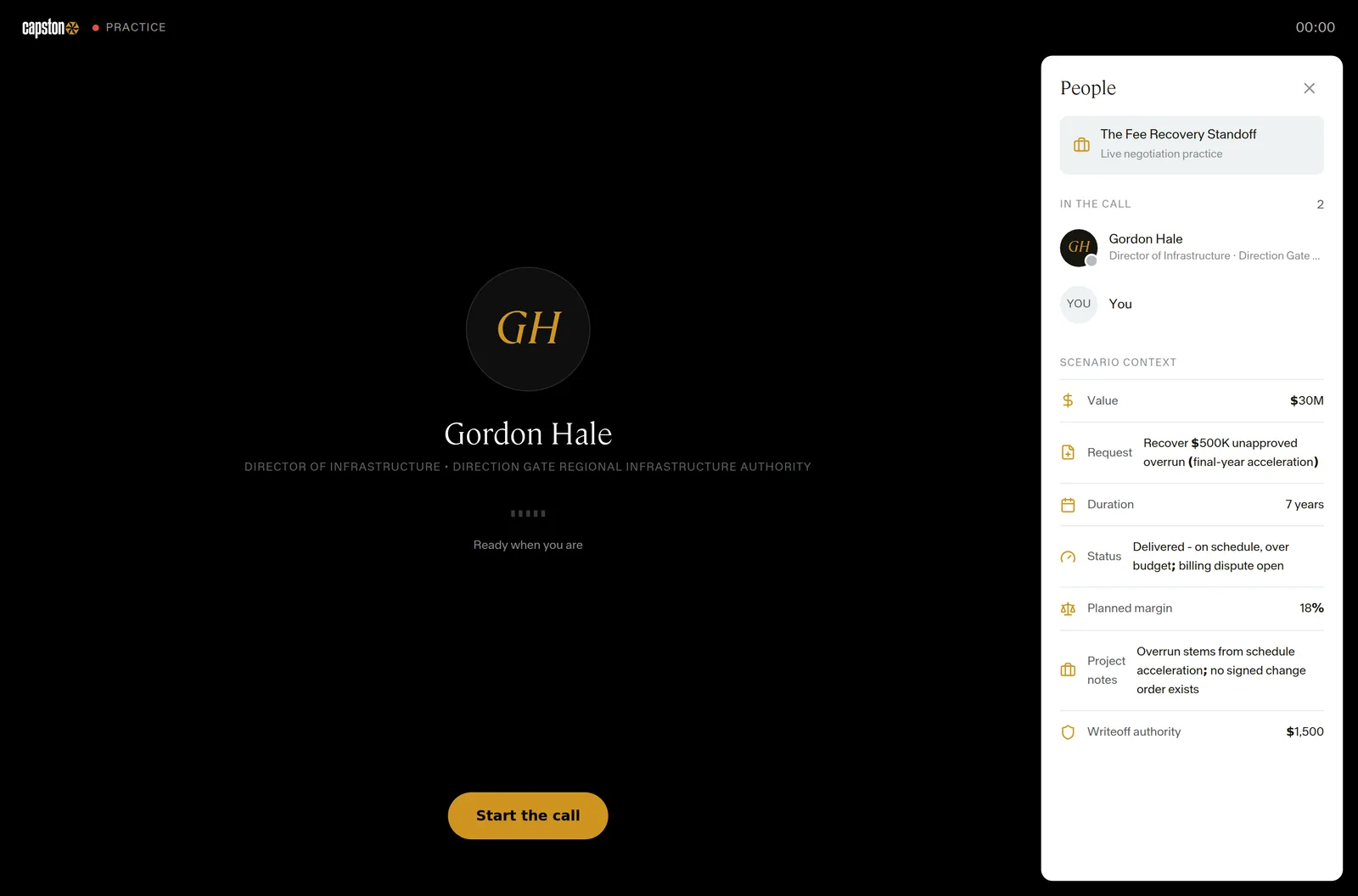
Put your team in a realistic situation to negotiate with an Agent that defends their own agenda. Negotiate!
Guided self follow-up while everything is fresh
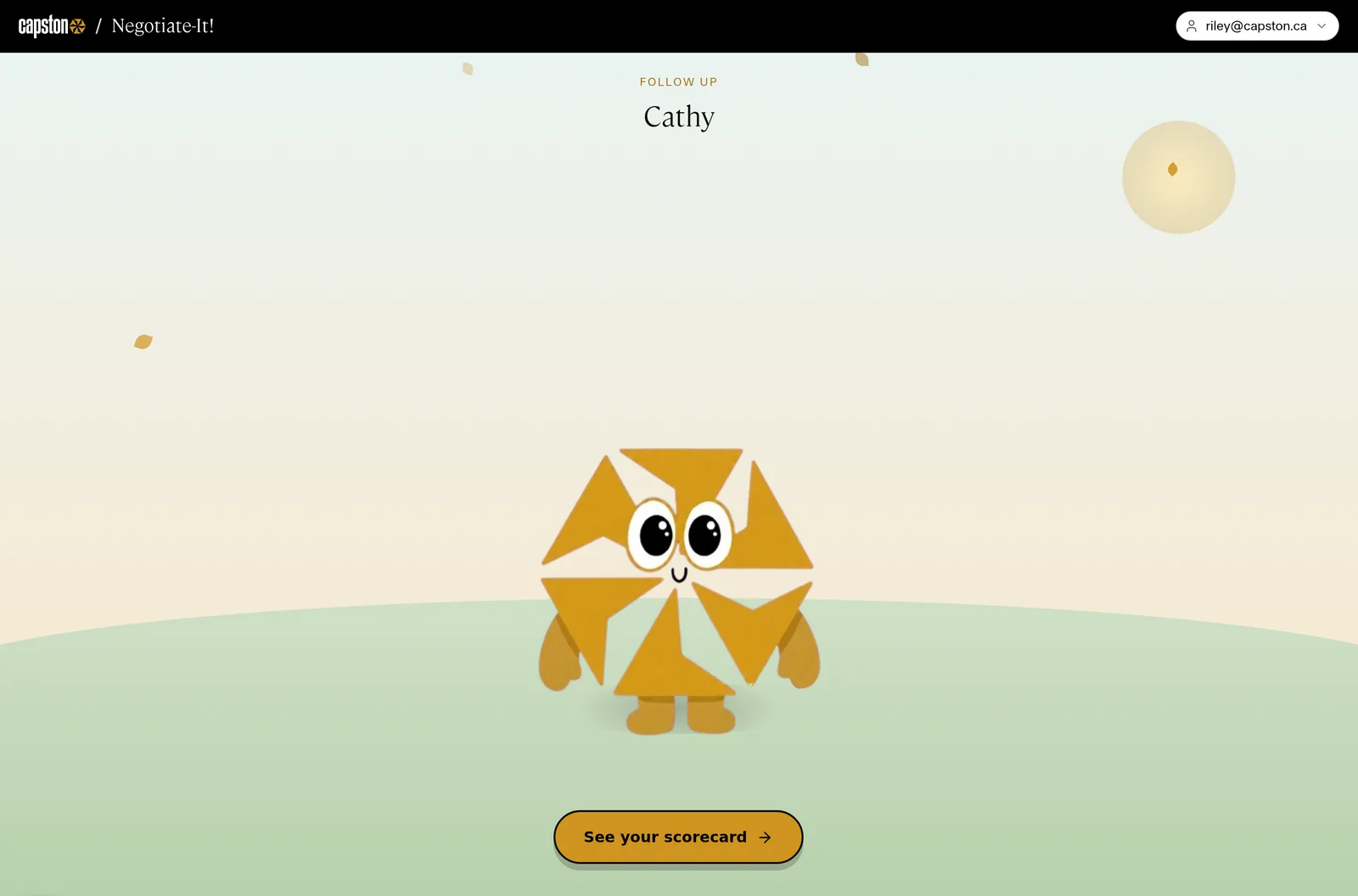
The moment the call ends, Cathy follows up with your team to help them reflect on the experience while everything is fresh.
Scorecard
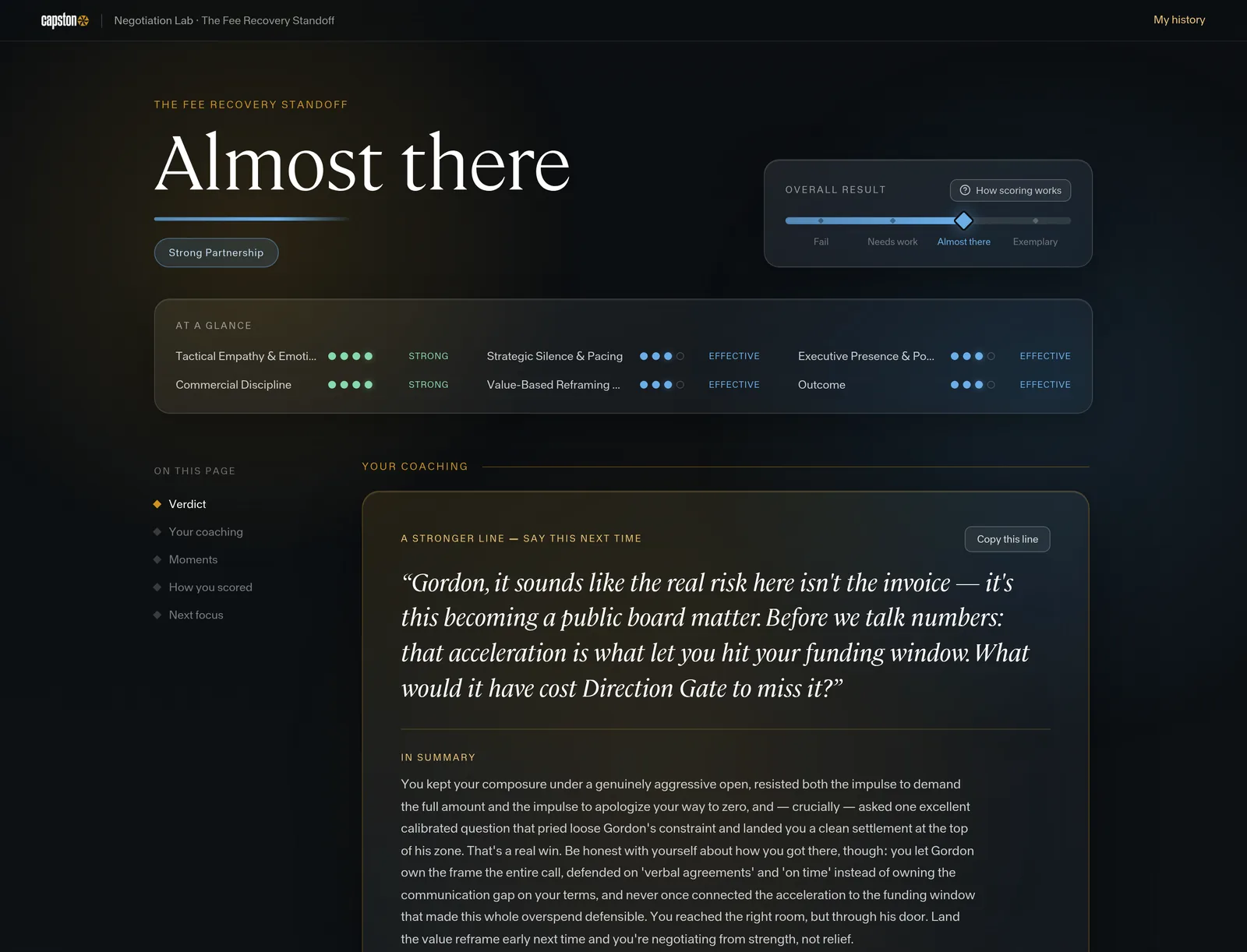
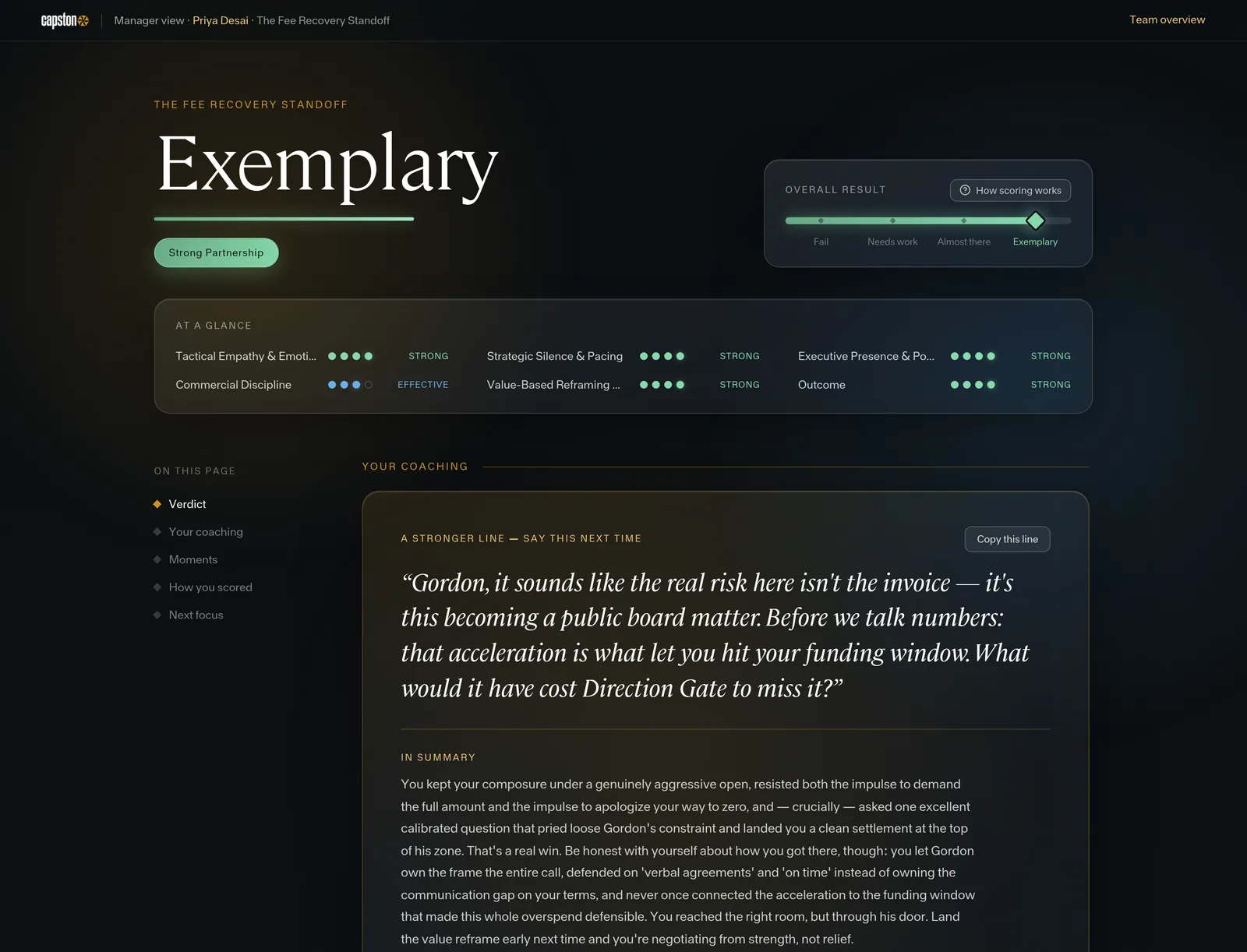
Consistent, explicit, and immediate feedback on calls that can meander every time. Every call gets evaluated on a four-band scale, and coaching to do better next time.
Watch six skills move, call over call
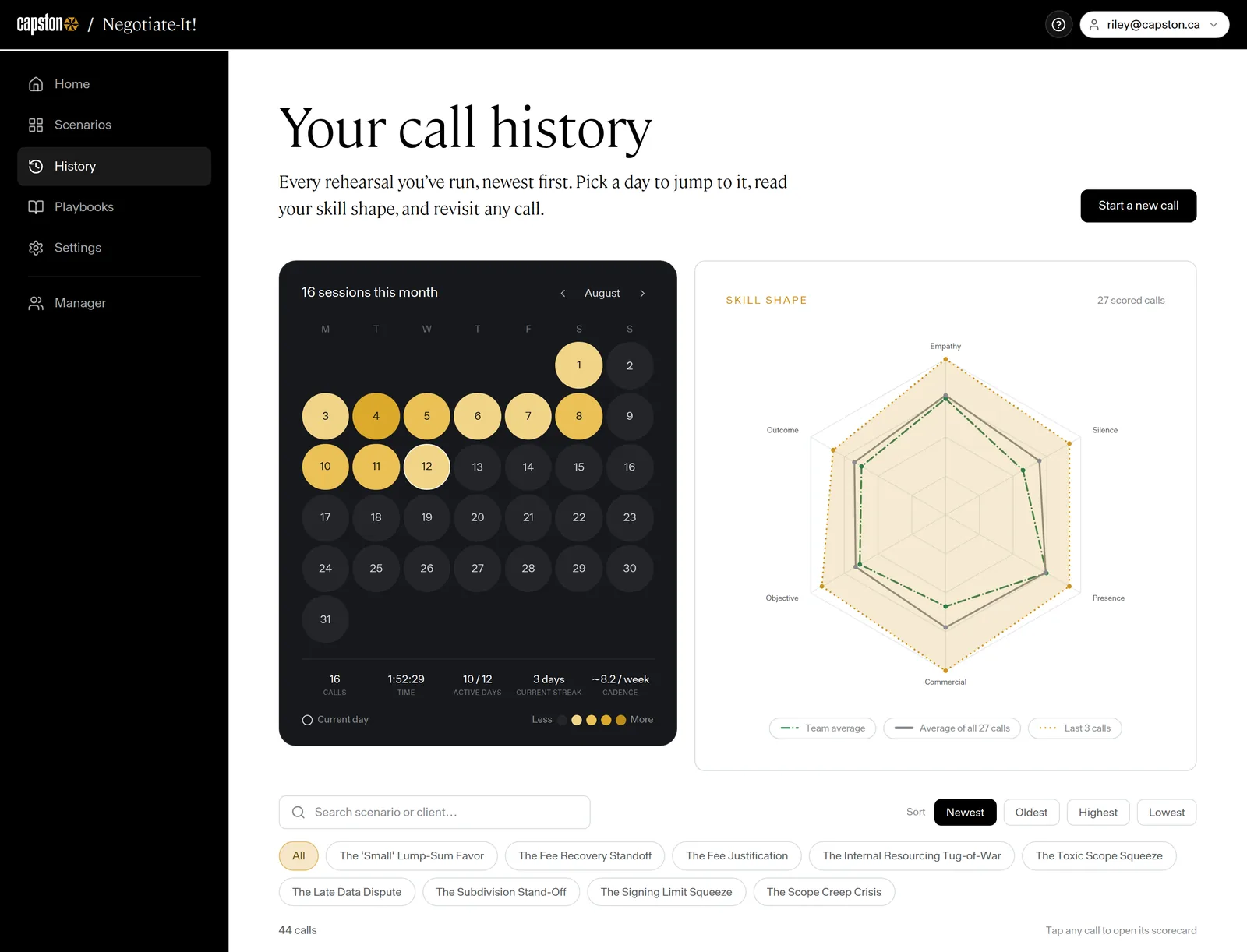
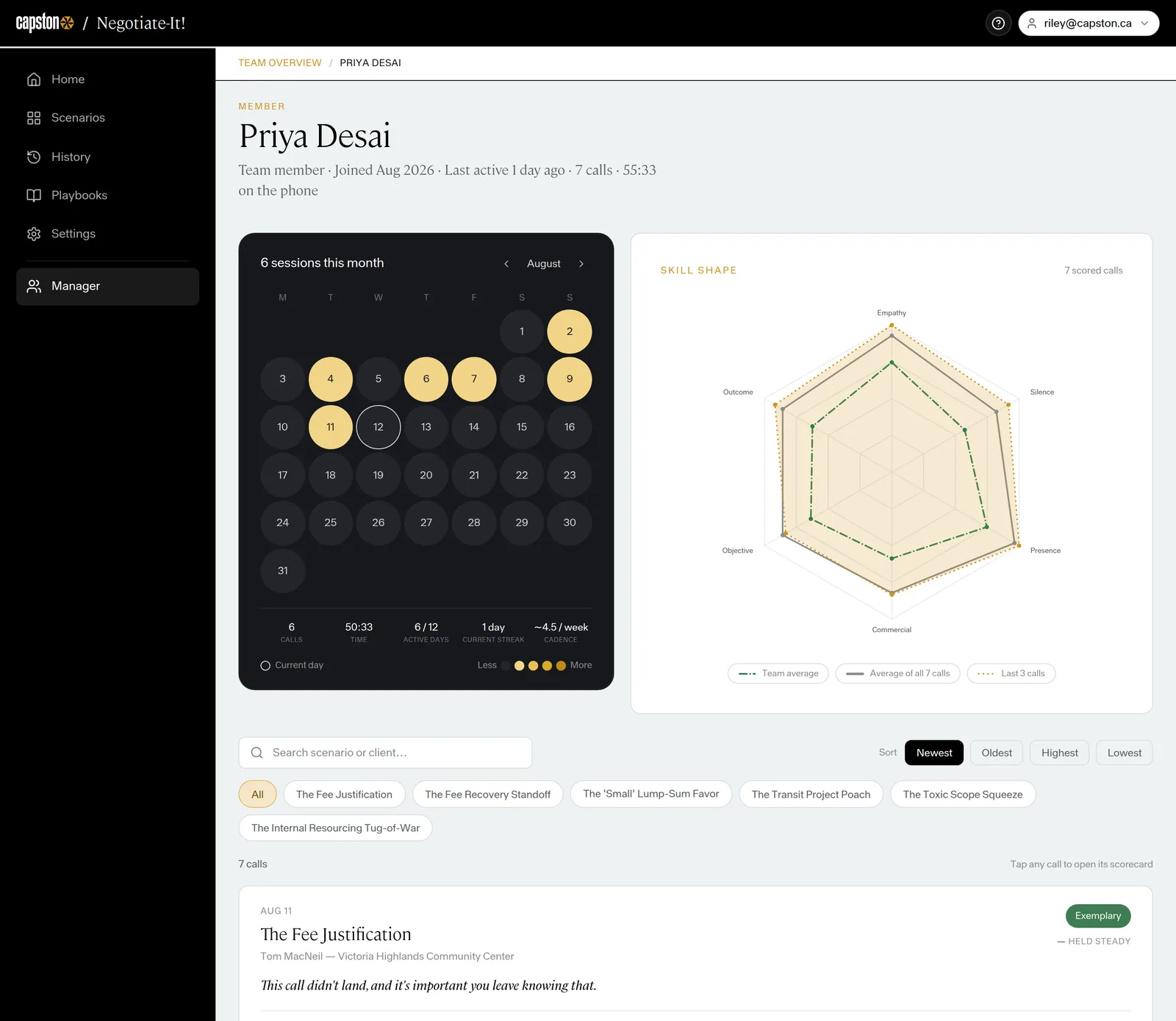
A personal call history with a calendar heatmap, the current streak and weekly cadence. The radar plots all six skills, Empathy through Outcome, against both the team average and their last three calls — so a jump or a plateau is visible without reading a single report.
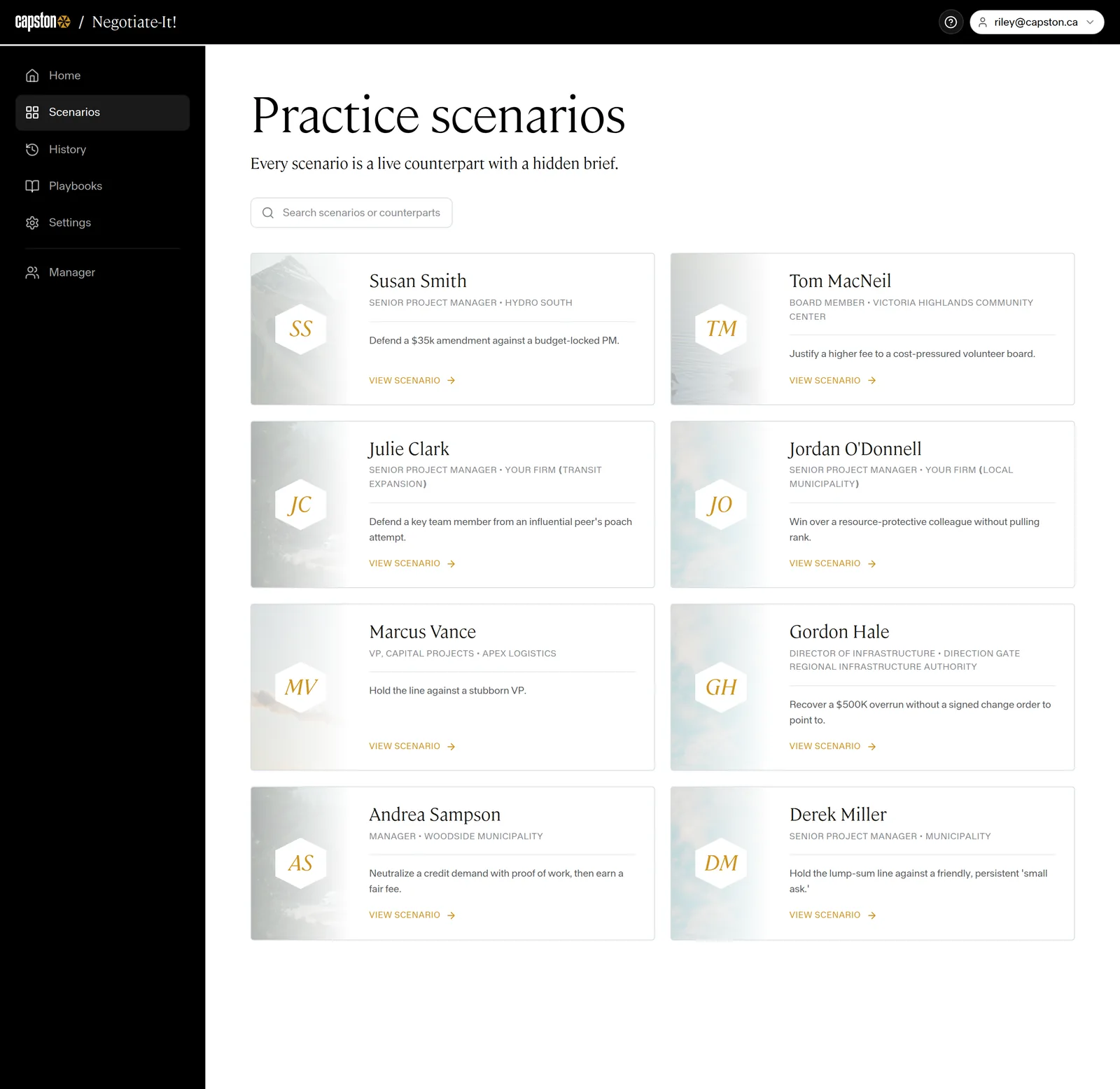
A budget-locked project manager wants you to absorb a $35,000 change at no extra cost.
Try it belowA long-standing client wants this year's work delivered at last year's rate — indefinitely.
Coming to your trainingA client wants six weeks of work compressed into two, and won't hear otherwise.
Coming to your trainingYou need to ask your client for money. Delightful. The rules changed mid-project, and there's now a piece of work that simply didn't exist when you priced this thing — an additional $35,000 on a $1,250,000 project. It's not optional, and it's not free. Negotiate with Susan: the project is too large to walk away from, and you'd hate to lose the working relationship you've built over years. Find out what she needs and get the work funded.
This scenario helps you put the core negotiation lessons of and into action.
There's a version of this call where everyone wins. Most people don't find it on the first try.
Keep running through the scenario until you find the win-win. Your scorecard after each run will help guide you on your journey. Can you achieve all the “exemplary” skill trophies along the way?
Enter your name above to start. Your browser will then ask for microphone access, and Susan will speak first — treat it like a live call.
Been here before?
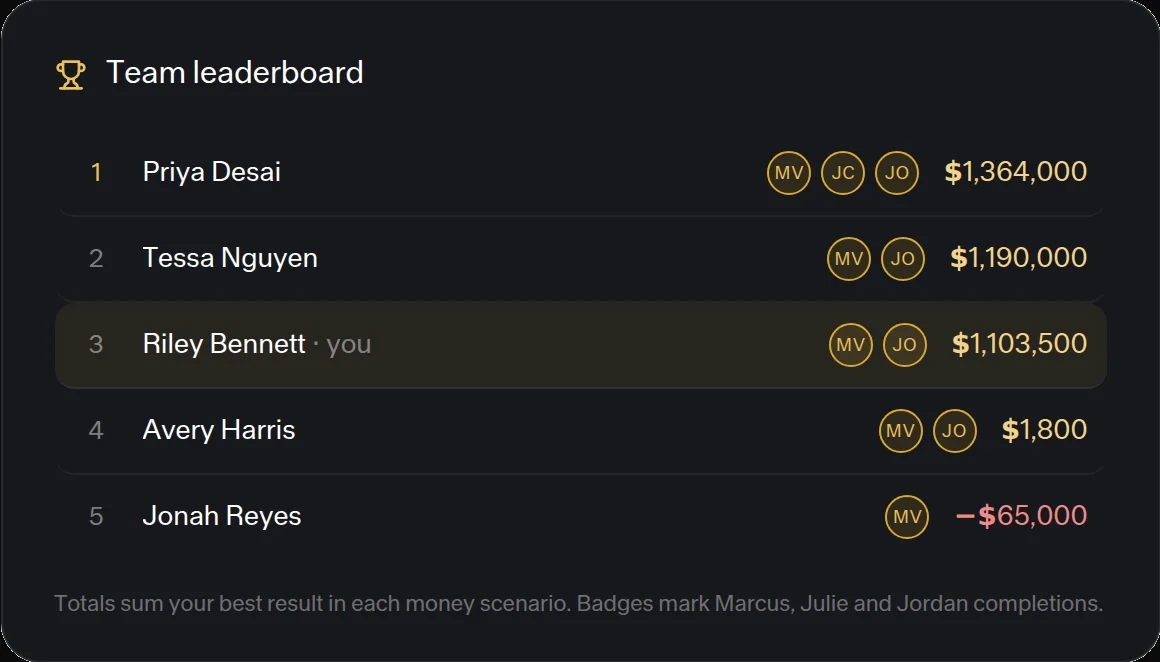
Badges and how much your team has negotiated from each of the scenarios. Riley trails Tessa by $86,500 — and that gap is exactly what brings people back for one more call. You never have to chase anyone.
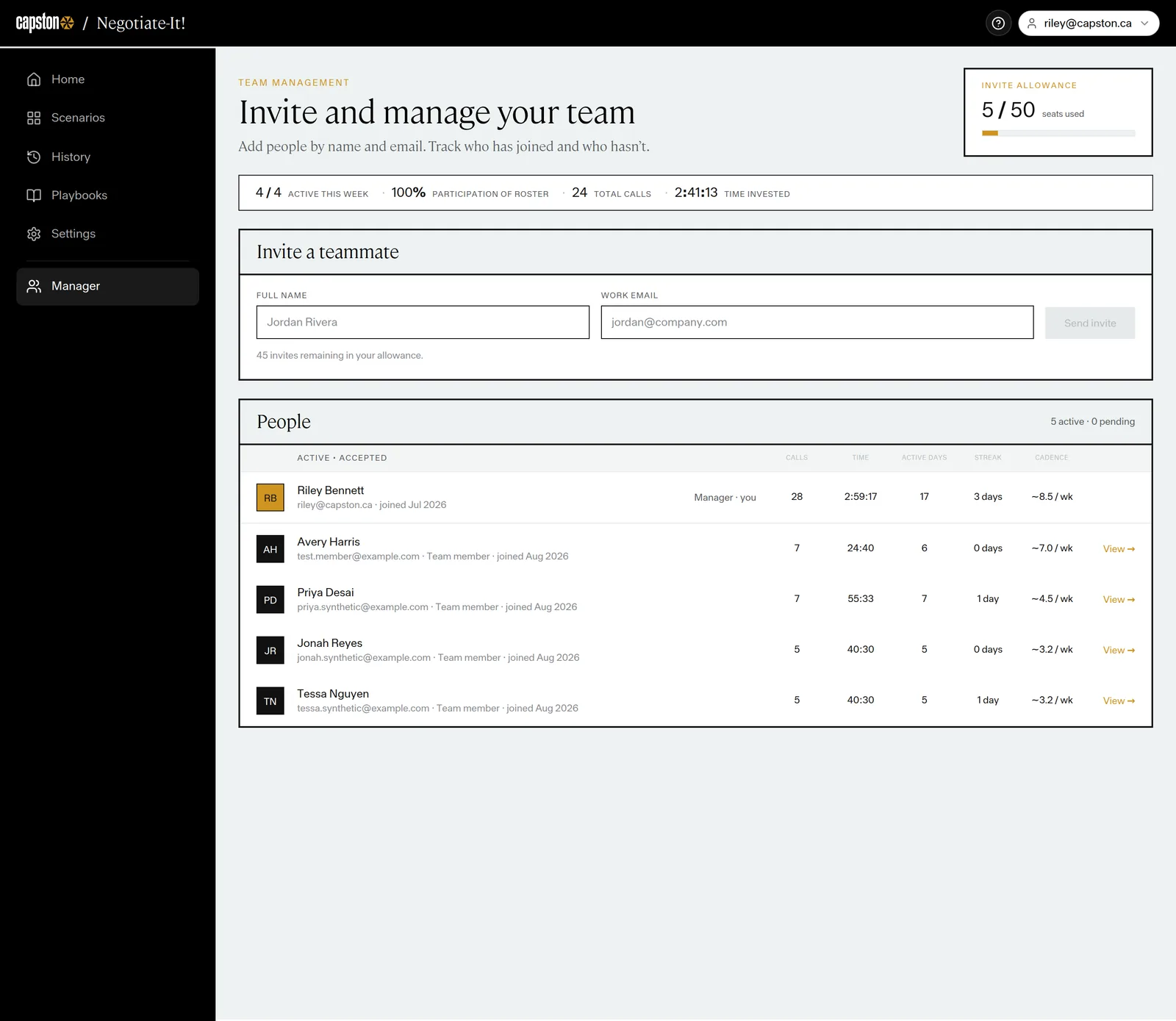
Invite the team, then watch practice happen. Engagement, skill movement and every debrief, without asking anyone how training is going.
Add people by name and email against your seat allowance. From there the roster tracks what matters: calls, time invested, active days, streaks and cadence, with the week summarized in one strip across the top. Participation is a glance, not a survey.
Open any member and see their training history: their practice calendar, their skill shape against the team average, and the full call list with verdicts and trend markers. Improving, Held steady, or Slipped. You know where each person stands before you ask.
You open the same scorecard the member saw, coaching included. So the next 1:1 starts from a specific call and a specific line, not a vague impression of how someone negotiates. The debrief has already done the awkward part for you.
Your team trains realistically and gets specific, actionable feedback on every call.
You see engagement at a glance: who is practicing, how often, and whether skills are moving.
The leaderboard makes it fun. Practice becomes friendly competition, not assigned homework.